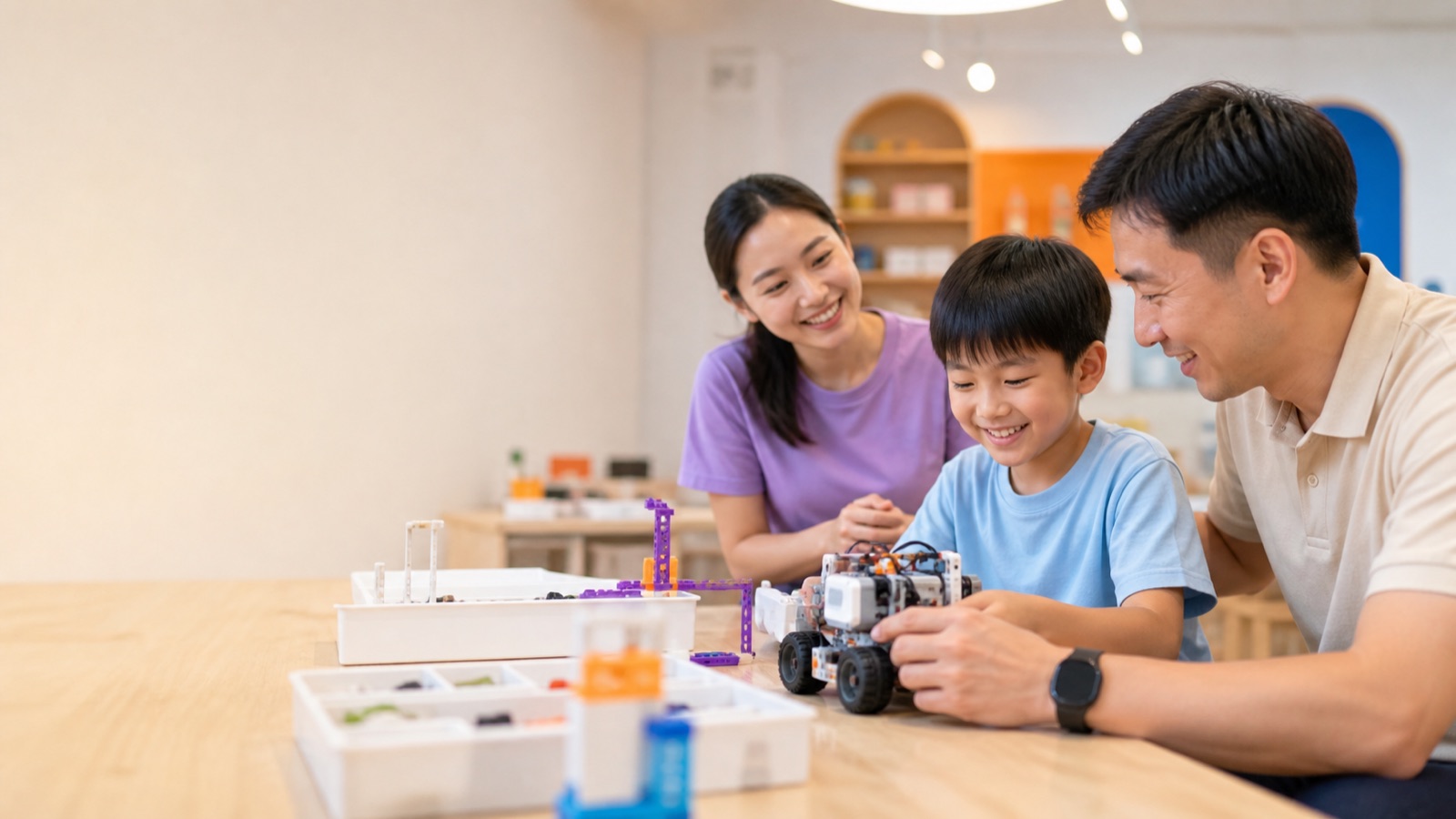
A robotics class can be a brilliant first step into technology—but it should feel like an invitation, not a test. The best fit depends less on whether a programme sounds advanced and more on whether it helps your child feel capable, curious and eager to return. Here are five questions worth asking before you enrol.
1. Is it designed for my child’s stage?
Age guidance is useful, but look beyond the number. Younger children benefit from concrete, story-led challenges and tools that respond quickly. Older learners may be ready to plan more independently, experiment with code and take on longer design problems.
Ask how the facilitator adapts for different confidence levels. A good programme gives every learner a way in, whether they arrive bursting with ideas or a little unsure.
2. What will children actually do?
Look for a clear balance of imagining, building, testing and sharing. A class should offer more than watching a demonstration or following a long list of steps. Children need chances to make choices, notice results and improve their work.
Ask for an example of a typical challenge. The answer will tell you whether the experience is mainly about reproducing a model or using technology to solve a meaningful prompt.
3. How does the class respond when something goes wrong?
Robotics is full of small surprises: a loose connection, a programme that needs adjusting, a model that is too heavy to move. These moments can build resilience when facilitators frame them as part of the process rather than an interruption.
Listen for language such as “test”, “debug”, “try another version” and “learn from the result”. It is a strong sign that the class values growth over getting it perfect first time.
4. Will my child have a voice?
Some learners love a spotlight; others contribute through careful building or an observation that changes the whole plan. Ask how groups are formed, how roles rotate and how facilitators ensure every learner can participate.
An inclusive class makes room for the builder, the storyteller, the careful tester and the big-picture thinker. Robotics works best when these strengths can work together.
5. What will they carry home?
The answer does not need to be a finished robot. A child might come home with a new question, a story about a team decision or the pride of solving something that initially felt tricky. Those are lasting outcomes too.
After the class, try asking “What surprised you?” or “What would you change next time?” These questions invite reflection without turning the journey home into a quiz.